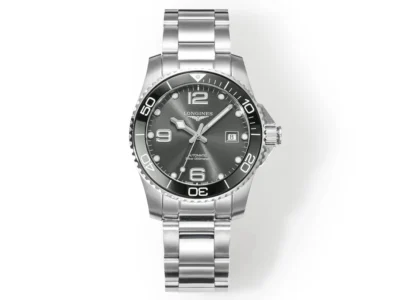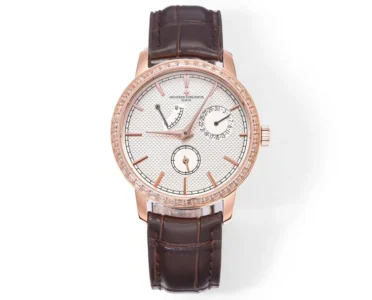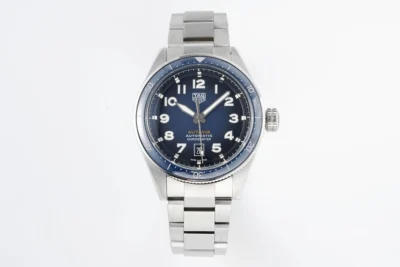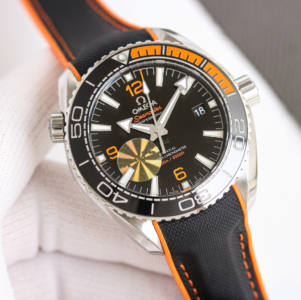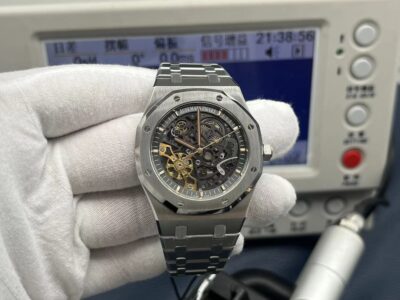

How to Spot a High-Quality Super Clone Watch: 7 Expert Checks
Not every watch sold as a “super clone” actually earns the title. The market contains a wide spectrum of quality, and knowing how to evaluate a piece before you buy — or after you receive it — protects your investment and sets correct expectations. These seven expert checks cover the criteria professional collectors use to grade super clone watches. Apply them in order and you will quickly distinguish a genuine top-tier super clone from an overpriced Tier 2 replica.
Check 1 – Movement Quality and Smoothness
The movement is the heartbeat of any watch, and it is the first thing an experienced collector evaluates. Hold the watch to your ear in a quiet room and listen to the rotor spin. On a genuine high-grade super clone with an NH35, Miyota 9015, or cloned 3235, the rotor produces a smooth, consistent whirring sound with no grinding, clicking irregularities, or erratic pauses. A low-quality movement will rattle or produce an inconsistent sound when the watch is tilted side to side.
Next, pull the crown to the time-setting position and rotate it slowly. On a super clone with a properly cloned or high-spec movement, crown engagement should be firm and positive — you should feel slight resistance as the crown clicks between positions (unscrewed, position 1, position 2). Budget replicas have crowns with loose, imprecise engagement and often a “crunchy” feel from poor threads.
Finally, observe the sweep second hand. At 28,800 vph (8 beats per second — used by Miyota 9015, ETA clones, and cloned 3235), the hand should appear to glide. At 21,600 vph (6 bps — NH35), the hand moves in subtle steps. Both are acceptable in the super clone tier, but if the hand visibly ticks in 4 or 5 discrete jumps per second, the movement is 18,000 vph or lower — a clear sign of a budget-grade piece that does not qualify as a true super clone.
Check 2 – Case Finishing and Polishing
Genuine luxury watch cases feature precisely delineated zones of brushed (satin) and mirror-polished finishing. On a Rolex Submariner, the top surfaces of the lugs are brushed while the flanks are polished. The bezel edges are sharp. The case sides between the lugs show a defined brushed texture running longitudinally. This dual-finishing technique is labour-intensive and reveals case quality immediately to a trained eye.
A high-quality Rolex super clone replicates these dual-finish zones precisely. Run your fingernail perpendicularly across the lug surface — on a brushed surface you should feel the grain of the satin finish as a subtle resistance. On polished flanks, the surface should be mirror-flat with no visible micro-scratches under light.
Red flags in case finishing: uniform polishing everywhere (the factory skipped the brushing step), rounded lug edges (correct super clones have sharp, almost knife-like lug chamfers), or visible tool marks under a loupe at 10× magnification on what should be a finished surface. VSF Grade and Clean Factory super clones pass this test consistently. AR Grade pieces may show slightly rounded chamfers on close inspection.
Also check the caseback. On screw-down casebacks (Submariner, Seamaster), the back should sit perfectly flush with the case, with no visible gap or uneven seating. The inscriptions on the caseback — reference numbers, serial numbers, water resistance rating — should be laser-engraved or die-stamped with clean, consistent depth. Inkjet or pad-printed casebacks on super clones are a disqualifying flaw.
Check 3 – Crystal Clarity and Anti-Reflective Coating
Sapphire crystal is the baseline standard for any super clone. With a hardness of 9 on the Mohs scale, sapphire resists daily scratching that would immediately damage mineral glass. But the crystal quality test goes beyond hardness — anti-reflective coating quality is equally important.
Hold the watch under a single light source — a lamp or window — and tilt it to observe the reflection on the crystal surface. Genuine luxury watch crystals and high-quality super clone crystals show a deep blue or blue-green tint in the reflection zone, with nearly total light elimination elsewhere. This is the signature of a multi-layer AR coating applied to both the inner and outer crystal surfaces. Budget replicas with single-layer or no AR coating show a bright white reflection across the entire crystal surface.
The crystal on a Rolex Submariner super clone should also have a correct cyclops lens (date magnifier) bonded in the correct position — centred over the date window at approximately the 3 o’clock position. The cyclops must provide 2.5× magnification; at this power, the date numerals should fill approximately 80% of the lens width. Any lens delivering less than 2× magnification is incorrect.
Finally, on models with a sapphire caseback (AP Royal Oak Offshore, Omega Seamaster Co-Axial), check that the display caseback crystal is equally clear and anti-reflection coated. A beautiful movement visible through a scratched or reflective caseback is a common quality shortcut in mid-tier super clones.
Check 4 – Weight and Solid Feel
Weight is perhaps the most immediately tactile quality indicator. Pick up the watch and hold it in your palm before putting it on your wrist. A high-quality super clone should feel dense and substantial — not featherlight. Here are reference weights for common references on the bracelet:
Rolex Submariner (ref. 126610LN): Genuine weight 155 g. VSF Grade super clone: 148–155 g. AR Grade super clone: 135–145 g. Budget replica: 85–110 g.
Rolex Daytona (ref. 116500LN): Genuine weight approximately 220 g (Oystersteel on Oyster bracelet). Clean Factory super clone: 192–200 g. Budget replica: 130–150 g.
AP Royal Oak 41 mm (ref. 15500ST): Genuine weight approximately 175 g. ZF Factory super clone: 165–175 g. Budget replica: 110–130 g.
Omega Seamaster 300M (ref. 210.30.42.20.01.001): Genuine weight approximately 168 g. VS Factory super clone: 158–168 g. Budget replica: 100–125 g.
If you have access to a kitchen scale, weigh the watch and bracelet together. Any result more than 20 g below the genuine reference weight indicates a hollow bracelet or thin-wall case — disqualifying features for a true super clone.
Check 5 – Date Magnification (Cyclops Lens)
The cyclops lens date magnifier is one of the most frequently failed quality checks in the super clone market. Genuine Rolex watches use a double-dome crystal with a cyclops magnifying bubble that provides precisely 2.5× magnification. At this power, the date numeral appears large, centred, and fills approximately 75–80% of the cyclops aperture width.
To check cyclops magnification: hold the watch at approximately 30–40 cm from your eye in normal reading light. The date numeral should appear noticeably large — significantly bigger than the same numeral on an unmagnified dial. If the date numeral appears roughly the same size as it would without the lens, magnification is 1.5× or less — a clear sign of a budget piece.
Additionally, check cyclops lens alignment. On genuine Rolex watches and high-quality super clones, the cyclops lens is precisely centred over the date window. Misalignment — the cyclops bubble sitting even slightly to the left or right of the date window centre — is a quality defect. VSF Grade and Clean Factory Grade super clones pass the cyclops test consistently; AR Grade pieces occasionally show slight centring variance.
For models with no cyclops (AP Royal Oak, Patek Nautilus, Omega Seamaster 300M), date legibility depends on the dial printing quality. The date wheel numerals should be crisp, correctly sized, and centred in the date aperture with equal margins on all sides. Numerals that appear tilted, oversized, or inconsistently centred indicate poor date wheel tolerances.
Check 6 – Bracelet Links and Clasp Quality
The bracelet represents a significant portion of both a genuine watch’s cost and a super clone’s quality variance. There are two fundamentally different bracelet constructions: solid links and hollow (stamped) links.
Solid links are milled from a single billet of stainless steel, with a consistent cross-section throughout. When you flex a solid-link bracelet, each link pivots with a firm, smooth motion and a satisfying click. The bracelet lies flat on the wrist and does not feel “spongy” or loose. A solid-link bracelet on a Rolex Submariner super clone weighs approximately 80–90 g by itself.
Hollow (stamped) links are formed by stamping stainless steel sheet into U-shaped profiles. When viewed from the side — particularly at the lug ends — you can see the folded edge of the stamping. Hollow-link bracelets weigh 30–50% less than solid-link versions and produce a tinny sound when tapped. Any Rolex super clone with a hollow bracelet is not a true super clone.
Check the clasp action. On genuine Rolex watches and VSF/Clean Factory super clones, the clasp closes with a positive, mechanical click — both halves of the butterfly clasp closing firmly. Budget clasps close loosely or require you to press the two halves together firmly before they latch. Also check the micro-adjust function: genuine Oystersteel bracelets offer a Glidelock clasp with approximately 15 mm of extension in 2 mm increments. Top-tier super clones replicate this; budget pieces offer a single fixed-length clasp or a basic fold-over without micro-adjust.
Check 7 – Crown and Pushers Precision
The crown — and pushers on chronographs — are the primary mechanical interfaces between the wearer and the watch. Their precision reveals manufacturing tolerances immediately.
On a screw-down crown (Rolex Submariner, Seamaster Professional), the threading should engage smoothly and resist with even torque as you tighten. There should be no cross-threading, no wobble when unscrewed, and a positive seal click when fully tightened. The crown gasket (invisible externally) should compress correctly to maintain the watch’s water resistance rating — typically 300 m for Submariner super clones.
Pull-out crowns (on non-diver references) should engage their positions cleanly. Position 1 (date setting, where applicable) and Position 2 (time setting) should be clearly defined — you should feel the detent mechanism holding the crown in each position, not a vague, mushy resistance. Budget replica crowns are notoriously loose and often spin freely between positions.
On chronograph super clones (Rolex Daytona, AP Royal Oak Offshore), the pushers — located at 2 and 4 o’clock — must have a defined stroke with a tactile click at actuation. The Clean Factory cloned 4130 movement produces audible clicks when the chronograph pushers are depressed, replicating the genuine column-wheel feel. Budget chronograph super clones use cam-lever chronograph mechanisms where the pushers feel stiff and imprecise.
Pusher and crown dimensions matter too. Measure the crown diameter: a genuine Rolex Submariner crown is 6.0 mm in diameter. Super clone crowns should be within 0.3 mm of this. Oversized crowns (7+ mm) are a common, immediately visible defect on budget pieces.
Red Flags to Avoid
Beyond the seven positive checks above, here are the most common red flags that indicate a watch does not qualify as a true super clone regardless of how it is marketed:
Price under $150 for a “super clone”: True super clones cost $250–$600. Any watch advertised as a “super clone” for $80–$150 is a Tier 2 mid-range replica at best. The movement, case, and bracelet costs alone prevent genuine super clones from being produced at this price point.
No case-open movement photos from the seller: Reputable super clone sellers provide caseback-open photos for every listing. If a seller refuses or “doesn’t have” movement photos, assume the movement is a budget Asian calibre, not the high-spec movement advertised.
Plastic case-back insert or display caseback on a Submariner: The genuine Submariner ref. 126610 has a solid screw-down caseback — no display window. Any Submariner super clone with a display caseback is inauthentic and indicates a factory cutting corners on reference accuracy.
Mismatched font weights in dial text: Super clone factories use the correct Rolex or brand-specific font in their dials. If the “ROLEX” crown logo appears slightly different in thickness, or the “SUBMARINER” text is heavier or lighter than reference, the dial is from a budget-tier factory. This is visible at 10× loupe magnification.
Lume plots that are orange rather than white/cream: Genuine luminous plots on modern Rolex watches are off-white to cream in daylight. Budget replica lume plots are often distinctly orange — visible even in normal lighting. High-quality super clones use correct-colour lume compounds that match the genuine reference.
Bracelet end-links that don’t fit flush: On genuine Rolex bracelets, the end-links (the bracelet sections that connect to the case lugs) fit with zero visible gap. On budget replicas, the end-links are generic and sit slightly proud or recessed from the lug profile, creating a visible step.
Frequently Asked Questions
Q: Can I use these checks to evaluate a super clone I already own?
A: Yes, all seven checks are equally applicable to watches you already own. If your current piece fails three or more checks, it is likely a Tier 2 mid-range replica rather than a true super clone — and upgrading to a VSF or Clean Factory Grade piece will deliver a noticeably superior experience. Focus first on movement sweep quality and bracelet weight as the fastest diagnostic tests.
Q: Which single check is the most reliable indicator of super clone quality?
A: Bracelet weight and solidity (Check 6) combined with movement sweep quality (Check 1) are the two fastest, most reliable indicators. A watch with a heavy, solid-link bracelet and a smooth 8-bps sweep is almost certainly a genuine super clone. A lightweight, hollow-link bracelet is disqualifying regardless of any other quality the piece may demonstrate.
Q: Do super clone quality standards vary by brand reference?
A: Yes. Quality factories specialize by reference. VSF Factory produces the best Rolex Submariner and GMT-Master II super clones. Clean Factory leads on the Daytona. ZF Factory produces the most accurate AP Royal Oak super clones. BBF and PPF Factories specialize in Patek Philippe Nautilus super clones. Buying from a factory that specializes in your target reference typically delivers better quality than buying a generic “all-brand” super clone from a non-specialist source.
Q: How often should I service a high-quality super clone?
A: For NH35 and Miyota 9015-powered super clones, service every 3–5 years of regular wear. For cloned 3235-powered pieces, the extended service interval is 5–7 years. Service includes cleaning the movement, replacing gaskets (to maintain water resistance), and lubricating pivots. Cost from a specialist super clone service centre: $80–$180 depending on movement complexity. Regular servicing maintains both accuracy and water resistance integrity.
Ready to find a super clone that passes all seven checks? Explore our curated collection at mirckclone.com/buying-guide — every piece is selected against the quality criteria above, with factory grade, movement specification, and verified bracelet construction listed for every reference.