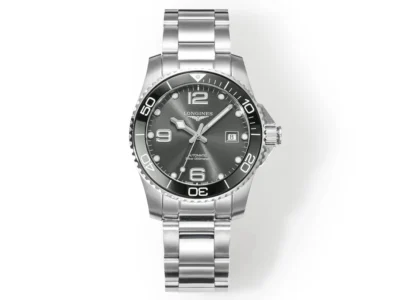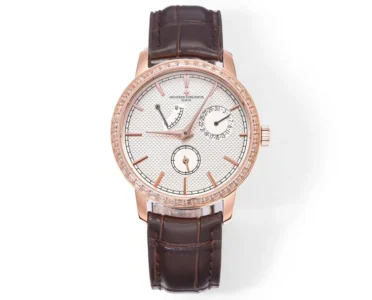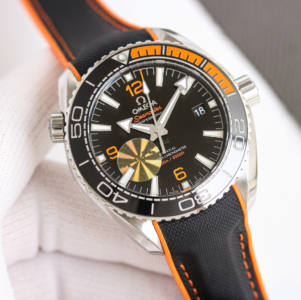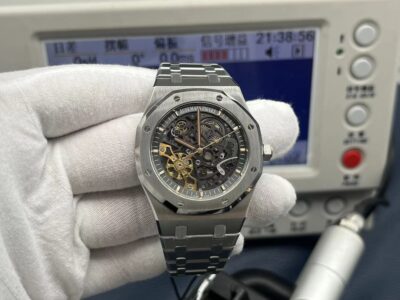

One of the most common questions from super clone watch buyers is also the most fascinating: how are these watches actually made? The answer involves sophisticated industrial processes, high-grade raw materials, and a manufacturing ecosystem in China’s Pearl River Delta that has progressively closed the quality gap with Swiss production over the past 15 years. This is a complete, transparent look at how super clone watches go from raw material to finished timepiece.
Where Super Clone Watches Are Made
Super clone watch production is concentrated in three geographic areas of China:
- Shenzhen, Guangdong: The primary hub for high-end super clone production. Factory districts in Guangming and Longhua house dozens of watch manufacturing operations ranging from case machining to dial printing. Access to precision CNC equipment, technical talent, and supplier networks makes Shenzhen the center of the industry.
- Dongguan, Guangdong: Secondary hub specializing in bracelet manufacturing and finishing. Many case factories have bracelet production in Dongguan and assembly in Shenzhen.
- Guangzhou: Component distribution and trading hub. Many movement parts, crystals, and accessories move through Guangzhou to final assembly points.
Step 1: Case Manufacturing
The watch case is produced by CNC (Computer Numerical Control) machining from solid steel bar stock. The process:
- Steel bar stock — 316L or 904L depending on the target model — is cut into blanks sized for the specific case
- Multi-axis CNC machines (typically 5-axis for complex case shapes) machine the case from the blank in multiple passes
- For 904L Rolex cases, the steel is more difficult to machine than 316L (it is harder and work-hardens more), requiring slower cutting speeds and more frequent tool changes
- After machining, cases are deburred and inspected dimensionally. Tolerances in quality super clone factories run approximately 0.05-0.1mm — compared to Rolex’s claimed 0.01mm tolerances
- Lugs, crown tube holes, and caseback threads are finished in separate operations
Step 2: Surface Finishing
Surface finishing is where the most skilled labor in super clone production is concentrated. Luxury watches use a combination of brushed (satin) and polished surfaces that must transition precisely at defined edges. The process:
- Brushing is applied using rotating abrasive belts at controlled angles — typically along the case flanks and bracelet center links
- Polishing is done on felt wheels with fine abrasive compounds — applied to bezel tops, case sides, and bracelet outer links
- The critical transition between brushed and polished surfaces is done by hand, using small tools to protect finished surfaces from contamination
- Cases are cleaned ultrasonically between finishing stages to remove abrasive particles
- Final inspection under strong light checks for scratches, inconsistent finish, or edge damage
Step 3: Ceramic Bezel Production
Ceramic bezels (like Rolex’s Cerachrom) are sintered components — produced from powder under heat and pressure, not machined from solid. The super clone process:
- Zirconium oxide (ZrO₂) powder is mixed with colorants and binding agents, then pressed into a bezel-shaped mold
- The green (unfired) compact is placed in a kiln and sintered at approximately 1,400°C for several hours, causing the material to densify and reach final dimensions
- Because ceramic shrinks approximately 20% during sintering, the mold dimensions must be scaled accordingly — this is one of the most technically demanding aspects of ceramic bezel production
- After sintering, bezel index markings are laser-etched into the ceramic surface, then filled with evaporated platinum or gold-colored ceramic powder in a PVD (Physical Vapor Deposition) process
- Final inspection checks ceramic color consistency, no microfractures, and accurate marking placement
Step 4: Crystal Manufacturing
Synthetic sapphire crystal (Al₂O₃) for watch crystals is grown using the Verneuil flame-fusion process: aluminum oxide powder melts in an oxyhydrogen flame and deposits onto a rotating seed crystal, building up a cylindrical boule up to 30cm in diameter. The boule is then sliced, ground, and polished to the required crystal shape and thickness.
Anti-reflective (AR) coating is applied via vapor deposition — extremely thin layers of magnesium fluoride and silicon dioxide are evaporated and deposited on both crystal surfaces, creating the optical interference that reduces reflection from 8% to under 0.5%.
Step 5: Dial Production
Dials are produced by specialist dial factories. The process for a printed lacquered dial like the Rolex Submariner:
- A brass or copper base plate is stamped to shape, including date aperture and hour marker holes
- Multiple UV-printed layers build up the base dial color and text
- For embossed dials (Nautilus Tapisserie, AP Royal Oak), the base plate is pressed against a textured die
- Hour marker applied: printed lume compound is precisely deposited using photo-etched templates
- Brand and model text is printed using pad printing — a soft silicone pad picks up ink from an etched plate and deposits it on the dial surface
- Final lacquer coating seals the dial
Step 6: Movement Sourcing and Regulation
Movements for quality super clones come from two sources:
- Genuine Swiss/Japanese OEM movements: ETA, Sellita, and Miyota movements are distributed through Hong Kong trading companies to Chinese watch factories. These are identical to the movements used in genuine mid-range Swiss watches. They arrive regulated from the factory and are installed directly.
- Chinese factory movements: Clone in-house movements (VSF 3235, A2813) are produced in smaller workshops in Shenzhen that specialize in movement manufacturing. These take genuine movement designs as reference and produce visual replicas with varying mechanical fidelity.
Regulation — adjusting the timing regulator to achieve minimum rate error — is done using electronic timing machines (Witschi or equivalent). Quality factories time-out their movements to within +/-5 seconds per day before assembly.
Step 7: Assembly and Quality Control
Final assembly involves pressing the dial onto the movement, setting hands, installing in the case, attaching the crystal, and fitting the bracelet. Done by experienced assembly technicians, this process takes 20-45 minutes per watch for quality pieces. Quality control involves:
- Visual inspection under 10x magnification for finishing defects, misaligned text, and dial contamination
- Timing check: movement timing rate recorded and documented
- Water pressure testing on applicable models: watches are pressurized to 1.25x their rated water resistance in a pressure tester
- Bracelet clasp function test and length adjustment
- Final photography for product listing
The Quality Gap: Super Clone vs Genuine
The honest answer is that quality super clone factories use many of the same materials and processes as genuine watchmakers — CNC machining, sapphire crystal growing, ceramic bezel sintering. The primary differences are:
- Tolerances: Genuine Rolex: 0.01mm. Super clone: 0.05-0.1mm. Detectable only with precision measuring equipment.
- Movement finishing: Genuine in-house calibres have hand-beveled (anglage) and decorated bridges. Clone movements do not replicate this internal decoration.
- QC consistency: A genuine Rolex undergoes 100+ quality control checkpoints. Super clone QC is less comprehensive, producing more unit-to-unit variation.
- Service infrastructure: Genuine watches have global authorized service networks. Super clones require independent watchmakers.
Shop our verified super clone collection — every piece is QC-inspected before shipping with documented movement specifications.
Frequently Asked Questions
Are super clone watches made in Switzerland?
No. Super clone watch cases, dials, and assembly occur in China (primarily Shenzhen and Guangdong). The movements in quality super clones may be genuine Swiss (ETA, Sellita) or Japanese (Miyota) movements imported into China, or Chinese-manufactured clone movements.
Is 904L steel used in super clone Rolex watches?
The best Rolex super clone factories (VSF, Clean Factory) use genuine 904L stainless steel for their cases and bracelets, matching Rolex’s specification. Mid-range and entry-level Rolex super clones typically use the more common 316L steel, which is visually and functionally very similar but with slightly different corrosion resistance characteristics.
How long does it take to make a super clone watch?
Case machining: 30-60 minutes per case on CNC equipment. Surface finishing: 2-4 hours of hand work. Assembly: 20-45 minutes. Total production time from raw material to finished watch is typically 2-3 days per piece when accounting for multiple finishing passes, quality control, and movement regulation.